How Downtown Investment Actually Works
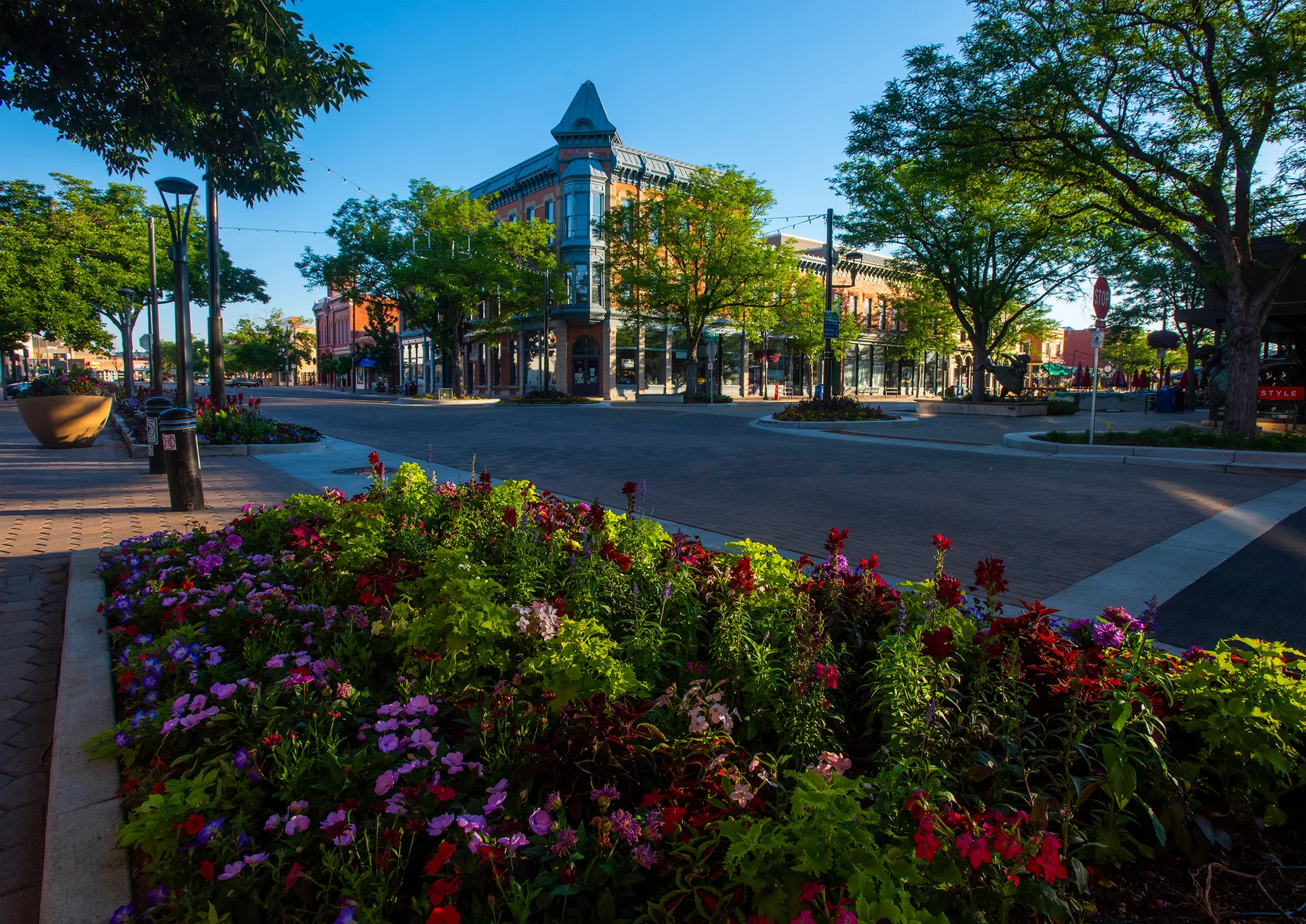
As downtown property values grow, the resulting tax revenue helps fund improvements in Downtown Fort Collins while supporting local partners across the community.
Growth Creates New Investment
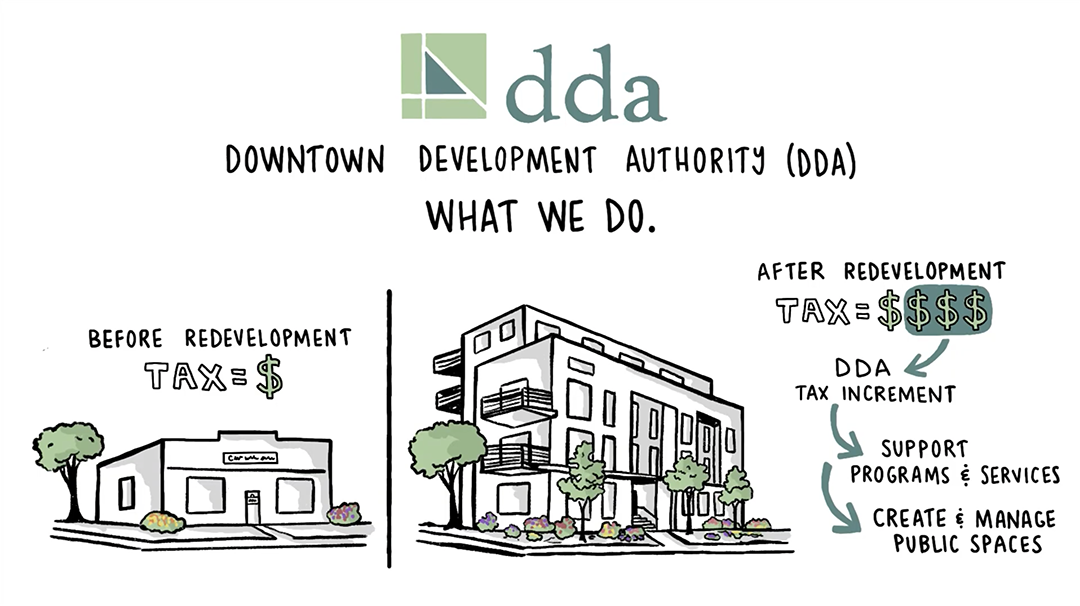
The DDA uses a funding tool called Tax Increment Financing (TIF) to invest in downtown projects and improvements — while also sharing its revenue with schools, the county, and other local government partners.
When a property in the downtown district is developed or improved, it increases in value, and the property taxes on it rise as well. The DDA captures that increase — called the tax increment — and reinvests it into downtown improvements. Today, a portion of that tax increment is also shared back with Poudre School District, Larimer County, and other local taxing entities, so the entire community benefits as downtown grows.
Why This Matters
This approach allows downtown to improve over time without creating new taxes. Growth funds future improvements. Investments happen sooner, not decades later. And the benefits extend well beyond downtown itself.
Property values and tax revenue are established at a starting point when the DDA was formed in 1981.
Private investment in building improvements increase property values over time. Then, public investment in active spaces like plazas and attractive alleyways become the fabric that connects people to businesses, residential buildings, cultural facilities, and places of employment.
As values rise, so does the tax revenue generated.
The additional revenue, in the form of DDA tax increment is reinvested into downtown projects, and also shared back with local partners like Poudre School District and Larimer County.
What These Funds Support
TIF revenue helps make projects possible that would otherwise stall or never happen at all: dozens of building renovations and new infill, public spaces like Old Town Square, Oak Street Plaza, and Linden Hybrid Street; the enhanced alleyway network; public parking structures including the Old Town, Civic Center, and Firehouse garages.
These are the foundational elements that keep downtown functional, safe, and vibrant.

Projects You See and Use Every Day
While the funding model may feel abstract, its impact is visible across downtown in the places people use every day — streetscape improvements, public plazas, enhanced alleys, better lighting and accessibility, parking and mobility infrastructure, the rehabilitation of historic buildings like the Linden Hotel and Avery Building, and housing partnerships including Oak 140, Uncommon, Confluence, Flats at the Oval, and Penny Flats.
Supporting the Broader Community
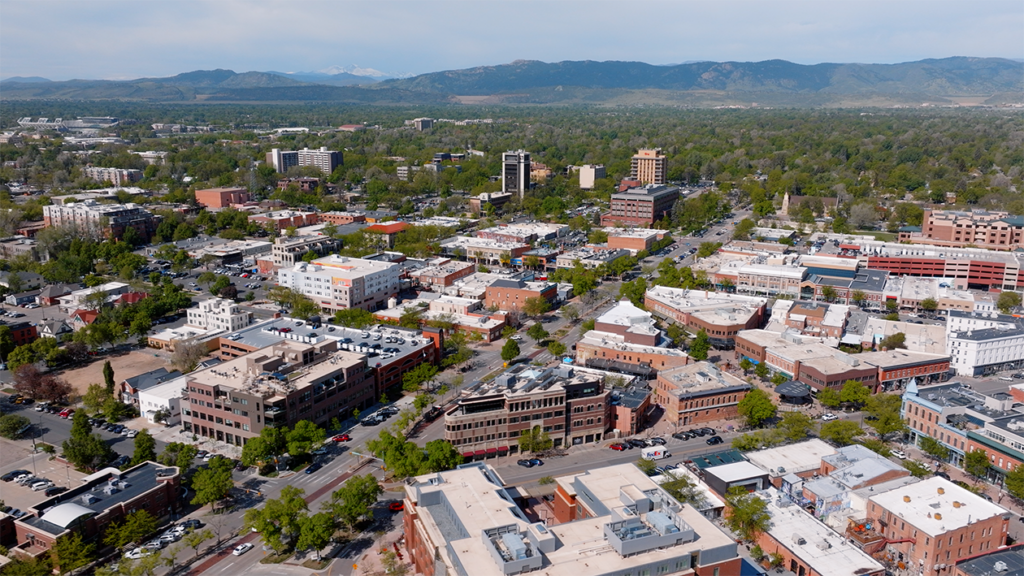
Downtown investment doesn’t just stay downtown. A portion of the revenue generated in the form of tax increment is shared with Poudre School District, Larimer County, and other public tax entities. As downtown succeeds, it contributes to the success of the entire community.
How This Was Approved Over Time
This funding model is not new, and it was not created without public input. In 1981, property owners, businesses, and downtown residents voted to establish the Downtown Development Authority and its ability to use Tax Increment Financing to support downtown improvements. Since then, the DDA has operated as a long-term, voter-supported tool to strengthen downtown Fort Collins.
The state statute and the mechanics of TIF have been updated several times since 1981, including the formula that now shares back 50% of its tax increment revenue with other taxing entities. This bi-partisan effort was led by the Fort Collins DDA and peers in Grand Junction and Longmont.

The DDA operates within clear financial limits, including an approved debt limit and a Plan of Development. These mechanisms ensures that investment stays within the defined boundaries of the central business district and that, projects and supportive programs are planned carefully, and the district remains financially responsible. As downtown has grown, this structure has helped guide when and how new projects can move forward.
TIF is used widely across the United States by cities and downtown districts to support long-term investment and economic vitality. Downtown projects in the urban core are more complex and expensive for the city, property owners, and developers. These involve aging infrastructure, limited and constrained spaces, coordination with existing businesses to minimize disruption while construction is underway.
Without this approach, many downtown projects would never have happened, improvements would take far longer or never be built, and partnership opportunities would be limited.
Understanding the Benefits of Tax Increment Financing
TIF does not require new taxes. The DDA does not realize tax increment without structure and oversight in the process by the County Assessor, State of Colorado Division of Taxation, and the State Legislature. It’s a long-term, focused public financing tool designed specifically to support the goals and objectives that create a vibrant downtown district while contributing back to the broader community by creating new value without raising taxes.
What This Means for the Community
- For Residents – A well-maintained, active downtown, and public spaces that feel safe and welcoming.
- For Property Owners – Support for long-term property value, and access to partnership opportunities.
- For Business Owners and Lessees – A stronger destination that attracts customers, and a better overall business environment.
Over time, this approach creates stronger property values, more private investment, a downtown that continues to evolve and improve, and a system where a successful downtown also supports schools, other government services, and the broader community.

Investment by Decade
The DDA’s investment in downtown Fort Collins has grown steadily over four decades — from foundational public infrastructure in the 1980s to increasingly large-scale partnerships in the 2000s and 2010s.
|
DECADE
|
PRIVATE PARTNER INVESTMENT
|
PUBLIC INVESTMENT
|
TOTAL |
|---|---|---|---|
|
1980s |
$757,000 |
$10,783,000 |
$11,540,000 |
|
1990s |
$1,374,195 |
Data unavailable |
— |
|
2000s |
$6,762,000 |
$17,333,000 |
$24,095,000 |
|
2010s |
$13,357,000 |
$12,681,000 |
$26,038,000 |
Source: DDA Annual Retreat, 2017. Private investment figures reflect DDA-partnered projects. 1990s public investment data unavailable. 2010s figures confirmed through 2017 only.